
Ideas
Bunk Bed Safety, What to Check Before You Buy
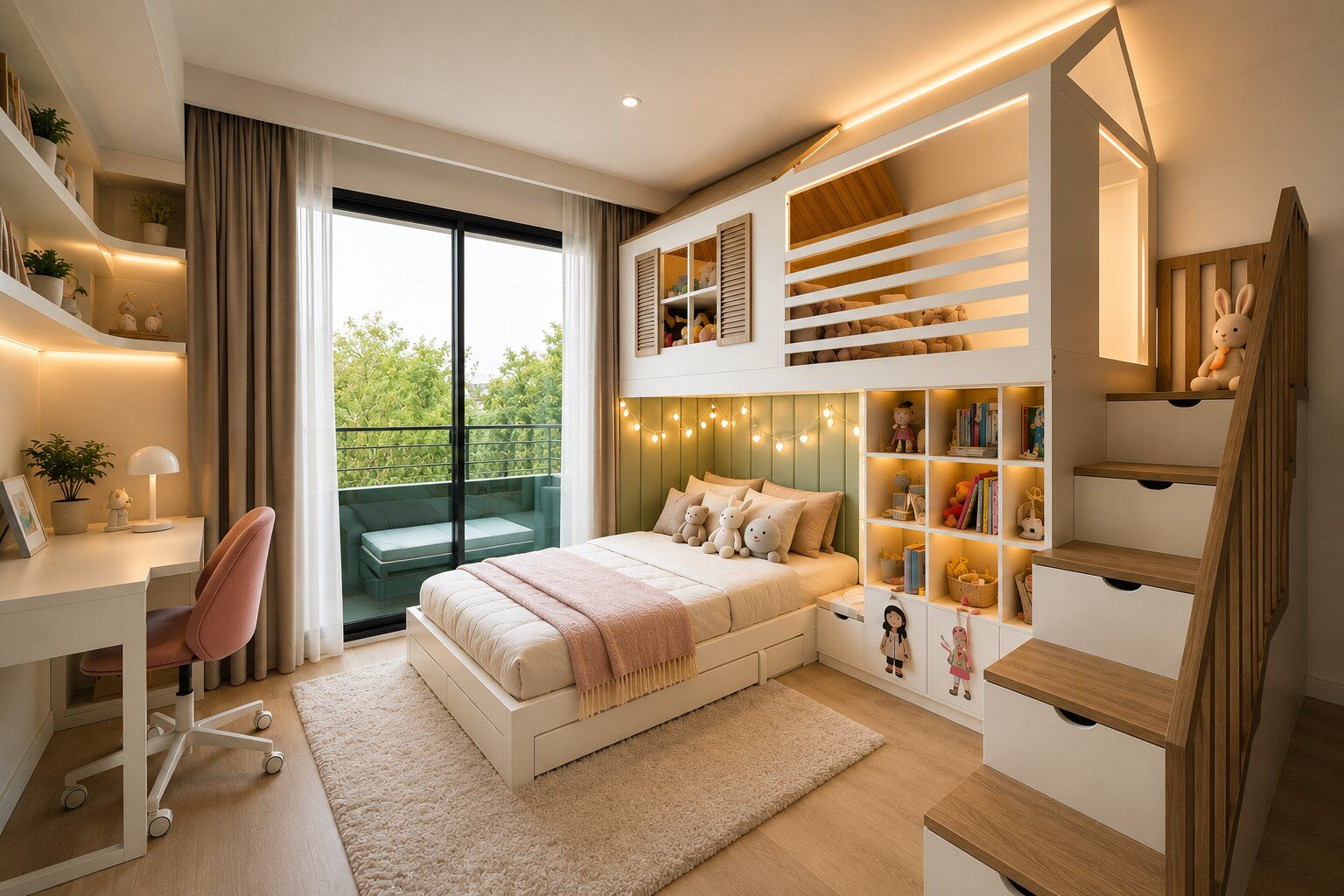
Bunk and loft beds are one of the smartest ways to use space in a kids room, but they are also the piece parents worry about most, and rightly. Most bunk bed injuries come from a small number of avoidable issues: guard rails that are too low, gaps that trap, ladders that slip and beds that are not fixed to the wall. This guide sets out exactly what to check before you buy, and how we build bunk and loft beds to be safe.
Guard rails, the single most important feature
Guard rails are what keep a sleeping child on the top bunk, so they matter more than any other feature. A guard rail should run along both long sides of the top bunk, including the ladder side, and it should sit high enough above the mattress to be effective once bedding is added. Low rails, or rails with a large gap where the ladder meets the bed, are the most common cause of falls. When we build a bunk or loft bed, the rail height is measured against the finished mattress height, not the bare frame, so it stays effective in use.
Safe gaps and spacing
Gaps are the second thing to check. Any gap in the guard rail or structure should be small enough that a child cannot slip through or trap their head. Rail openings and the space between the guard rail and the mattress both need to be sized correctly. On a made to measure bed we control these dimensions exactly, which is harder to guarantee with a flatpack bed assembled at home.
The gaps parents should check
- The gap between the guard rail and the top of the mattress
- Any openings in the guard rail itself
- The space around the ladder where it meets the bed
- Gaps in the structure a small child could get a limb or head into
The right mattress, at the right height
A mattress that is too thick is a hidden hazard, because it raises the sleeping surface and reduces the effective height of the guard rail. Every bunk has a maximum mattress thickness for this reason. Using the correct mattress keeps the rail doing its job. We specify the mattress height the bed is designed for, so the guard rail stays safe once the bed is made up.
Ladders and stairs
A ladder should be fixed, not loose, angled slightly for easier climbing, and have rungs a child can grip. For younger children, storage stairs are safer and more practical than a vertical ladder, and they add drawers at the same time. Whichever you choose, it should be solidly attached to the bed rather than hooked on, so it cannot shift when a child climbs.
Anchor the bed to the wall
A tall bed that is not fixed to the wall can rock or tip, especially when children climb or play on it. Every loft and high bunk should be mechanically anchored to the wall structure. This is one of the most important safety steps and one of the most commonly skipped with flatpack beds. We anchor every loft and bunk we install as standard, into the wall structure, not just the plasterboard.
Age guidance for the top bunk
General guidance is that the top bunk suits children of around six years and older, because younger children are more likely to fall and less able to climb safely. Below that age, a loft bed with the sleeping level lower, or a mid height bed, is a safer choice. Every family is different, so judge your own child, but use the age guidance as a starting point rather than ignoring it.
Materials, joints and load
A bunk or loft bed carries a child and often an adult sitting with them, so the frame has to be genuinely strong. Load bearing parts should be solid or engineered timber sized for the job, with joints that stay tight over years of use. Cheap beds can loosen and creak within months. We size the frame for a child plus an adult and use joinery that holds, because a bed is not the place to save on structure.
A quick pre purchase safety checklist
- Guard rails on both long sides, high enough above the finished mattress
- No gaps that could trap a head, limb or body
- A mattress within the maximum thickness the bed allows
- A fixed, grippable ladder or, better for young children, storage stairs
- The bed anchored to the wall structure, not freestanding
- Top bunk used by a child around six or older
- A strong frame in solid or engineered timber with tight joints
How we build bunk and loft beds safe
Every bunk and loft bed we make is built to a written six point safety specification and anchored to the wall on installation. We measure guard rail heights against the real mattress, size all gaps correctly, build in storage stairs where they suit the child, and use frames rated for a child and an adult. You can read the full approach on the Built Safe page, and it is written on your quote so you can hold us to it. Book a design visit to plan a bed that is safe and made to measure for your room.
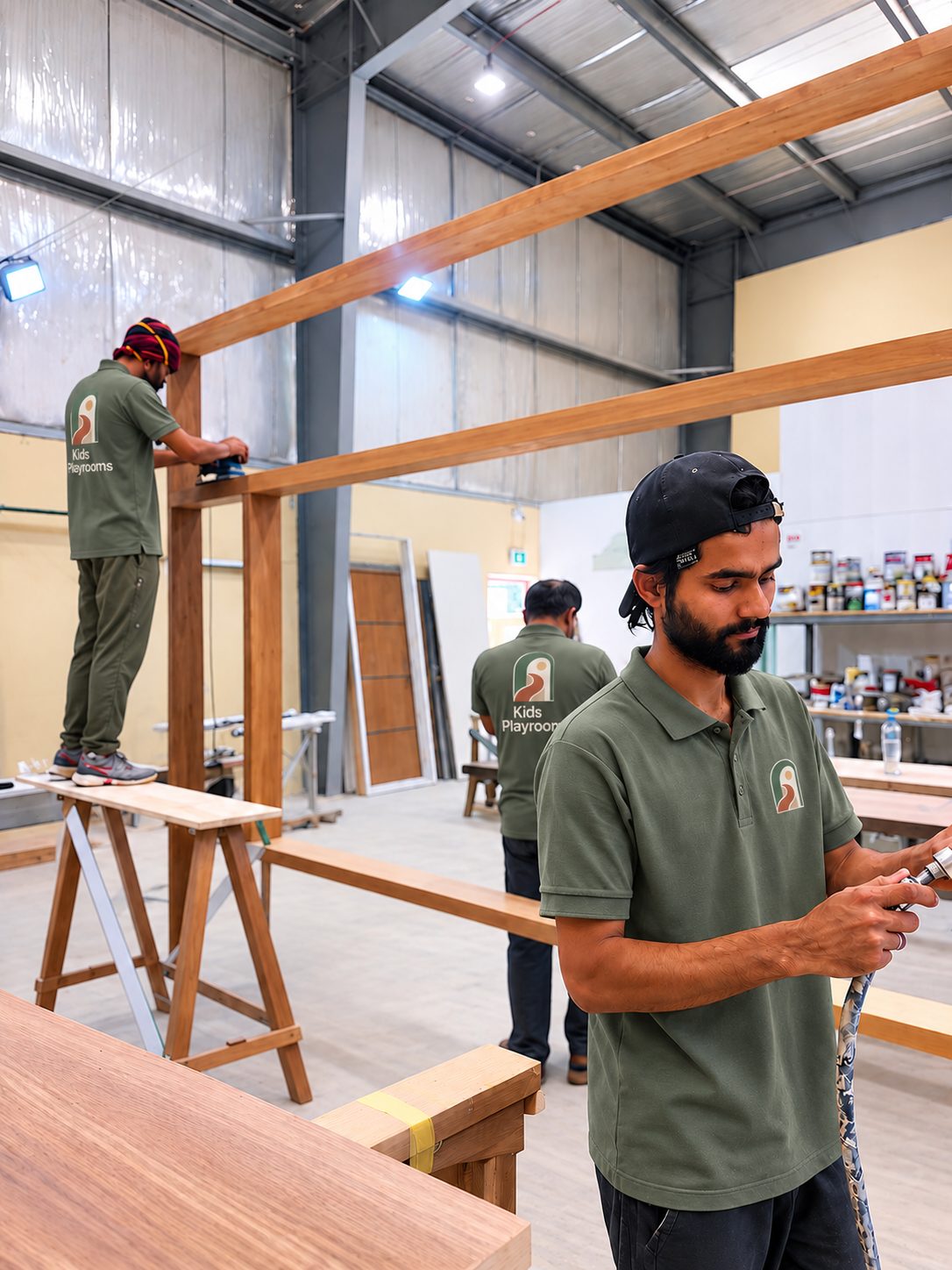
Written by the Kids Playrooms design team
We design and build bespoke kids rooms, beds and playrooms in our own factory in Dubai Investment Park 2. This guide reflects what we have learned making and installing rooms for families across Dubai, not theory. Every project is measured on site, designed in 3D and built to our written child safety specification.